Physical Address
Texas, U.S.A
Physical Address
Texas, U.S.A
As we get older, our bodies change in many ways. One key change is the drop in NAD+ levels. NAD+ is a coenzyme that helps our cells work right.
Keeping NAD+ levels healthy is key to fighting aging. Studies show that low nicotinamide adenine dinucleotide deficiency can cause health problems. So, it’s important to know how to increase these levels.
This guide will explain why NAD+ is important. We’ll look at why its levels go down and how to naturally boost them.
NAD+ is a coenzyme found in all living cells. It’s key for metabolic processes and DNA repair. It acts as the main energy source for our cells, powering all metabolic activities.
As we age, our NAD+ levels drop steadily. This decline is linked to many diseases of aging. Knowing how NAD+ works in our bodies is key to understanding its health benefits.
NAD+ is vital for many cell functions. It helps with energy metabolism, DNA repair, and gene expression. It’s essential for our cells to work properly, affecting our body’s basic functions.
NAD+ helps turn food into energy. It’s involved in making ATP, the cell’s energy source. It also helps repair DNA damage, keeping our genes stable.
Having enough NAD+ is good for many things. It boosts energy, improves brain function, and supports aging health. Keeping NAD+ levels up is crucial for cell balance and overall health.
Aging leads to a natural drop in NAD+ levels. This decline is connected to many age-related diseases. Knowing how NAD+ affects aging can help find ways to slow down aging.
| Aspect | Description | Impact of NAD+ |
|---|---|---|
| Energy Metabolism | Process by which cells generate energy | NAD+ is crucial for converting food into energy |
| DNA Repair | Mechanisms that maintain genomic stability | NAD+ is essential for activating DNA repair proteins |
| Aging | Natural process associated with declining NAD+ levels | Maintaining NAD+ levels can support healthy aging |
In conclusion, NAD+ is a vital molecule for many cell functions. Its decline with age is linked to many health problems. It’s important for healthy aging and preventing age-related diseases.
NAD+ deficiency can affect our health and well-being greatly. It shows how important it is to keep NAD+ levels right for our body’s functions.
People with NAD+ deficiency might feel:
These symptoms can really change our daily lives. It’s key to spot NAD+ deficiency signs early.
The risks of NAD+ deficiency are big. Studies link low NAD+ to many health problems, like:
| Health Condition | Description |
|---|---|
| Metabolic Disorders | NAD+ is key for metabolism. Low levels can cause insulin resistance and metabolic syndrome. |
| Cognitive Decline | NAD+ helps keep neurons healthy. Without enough, we might lose cognitive function and face neurodegenerative diseases. |
| Increased Frailty | NAD+ deficiency can make muscles weak, especially in older adults. |
Knowing these risks shows why keeping NAD+ levels right is so important.
NAD+ deficiency can also affect our minds, causing:
These mental effects can be as bad as the physical ones. It shows we need to take care of our whole health.
In summary, NAD+ deficiency can harm our physical and mental health a lot. Spotting symptoms and knowing the risks are key steps to manage and maybe even prevent NAD+ deficiency’s effects.
Many things can cause NAD+ levels to drop. Lifestyle and environment play big roles. To keep NAD+ levels right, we need to tackle these issues from all sides.
Getting older is a main reason for NAD+ loss. Our bodies make less NAD+ as we age. This leads to less energy and more stress in our cells. It’s key to know and tackle these factors early on.
Key aspects of aging that affect NAD+ levels include:
Our lifestyle choices greatly affect NAD+ levels. Some habits lower NAD+, while others help keep it up.
Some lifestyle factors that negatively impact NAD+ levels are:
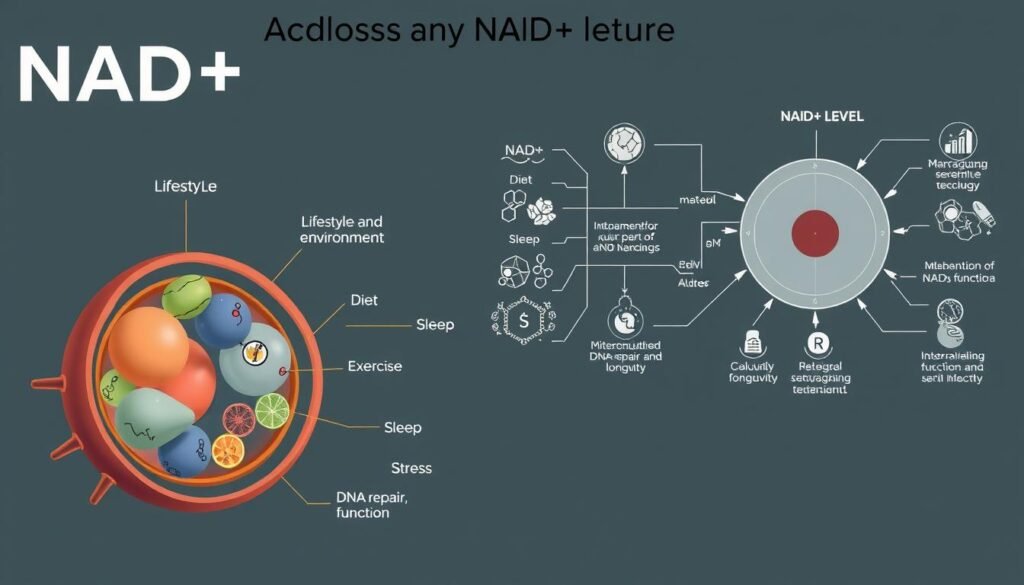
Environmental factors also shape NAD+ levels. Some stressors in our environment can speed up NAD+ loss.
Notable environmental influences include:
Knowing these factors helps us take steps to keep NAD+ levels healthy.
Having the right amount of NAD+ is key for feeling good. It boosts energy, sharpens the mind, and helps us age well. Keeping NAD+ levels in check is vital for our health. It helps our body work smoothly.
NAD+ is important for energy. It helps cells make ATP, the energy they need. With enough NAD+, cells work better, and we feel more energetic.
Key aspects of improved energy metabolism include:
Good NAD+ levels also mean a sharper mind. NAD+ helps with brain health and memory. This leads to better memory and focus.
| Cognitive Benefit | Description |
|---|---|
| Improved Memory | Enhanced ability to form and recall memories |
| Better Concentration | Increased focus and attention span |
| Enhanced Cognitive Performance | Overall improvement in cognitive processing and function |
NAD+ is key for aging well. As we get older, NAD+ levels drop. Keeping NAD+ levels up helps our body age gracefully.
The importance of NAD+ in aging is highlighted by its role in:
Knowing the benefits of NAD+ helps us improve our health. We can take steps to feel better and live better.
Certain foods and supplements can increase NAD+ levels, helping your health. Eating foods rich in specific nutrients is key to keeping NAD+ production high.
Foods high in vitamin B3, like milk, eggs, and lean meats, help make more NAD+. Vegetables like broccoli, cabbage, and cauliflower also boost NAD+ levels.
Eating a variety of whole foods is important. This helps your body make NAD+ better. Here are some top foods for NAD+:
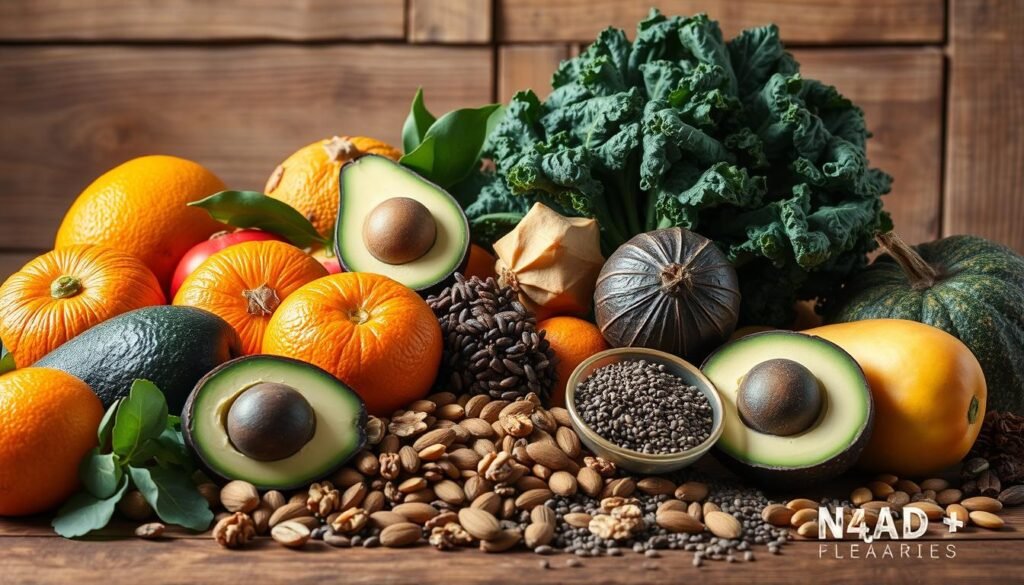
Some supplements can also help NAD+ levels. Nicotinamide riboside (NR) and nicotinamide mononucleotide (NMN) are good for boosting NAD+.
Always talk to a healthcare professional before taking supplements. They can help you choose the right ones for you.
Eating a balanced diet is vital for good NAD+ levels. Eating a variety of whole foods gives your body the nutrients it needs for NAD+ production.
By eating well and choosing the right supplements, you can support your NAD+ levels. This helps keep your overall health strong.
Boosting NAD+ levels is easier with the right lifestyle choices. By adding certain habits to your day, you can boost NAD+ and feel better.
Exercise is a great way to increase NAD+ levels. It turns on pathways in cells that make more NAD+. Aerobic exercises like running or cycling work best for this. Also, weight training helps by keeping muscles healthy.
Research shows exercise boosts NAD+ by turning on sirtuins, important for cell health. Mixing aerobic and weight training can really help your NAD+ levels.
| Type of Exercise | Effect on NAD+ Levels |
|---|---|
| Aerobic Exercise | Increases NAD+ production by stimulating cellular pathways |
| Resistance Training | Promotes muscle health and contributes to increased NAD+ levels |
| High-Intensity Interval Training (HIIT) | Boosts NAD+ levels by activating sirtuins and improving metabolic health |
Good sleep is key for healthy NAD+ levels. Sleep helps regulate NAD+ metabolism. Poor sleep can lower NAD+ levels, hurting energy and health.
Studies link sleep loss to lower NAD+ levels, showing sleep’s importance. Try for 7-9 hours of sleep each night to keep NAD+ levels up.
Managing stress is vital for NAD+ health. Stress can use up NAD+ by activating stress pathways. Meditation, yoga, and deep breathing help manage stress and support NAD+ health.
Stress management can reduce stress’s negative effects on NAD+ levels. Regular use of these techniques can improve well-being and NAD+ production.
Supplements are getting more popular to help make more NAD+. As scientists learn more about NAD+, new supplements have come out. They might help boost NAD+ levels for better health.
NAD+ supplements include nicotinamide riboside (NR) and nicotinamide mononucleotide (NMN). They aim to increase NAD+ in the body. This could improve energy, brain function, and overall health.
Nicotinamide riboside (NR) is well-studied and boosts NAD+ levels. It’s available in many forms. Nicotinamide mononucleotide (NMN) is also promising for raising NAD+ directly.
Choosing the right NAD+ supplement depends on your health, lifestyle, and needs. Always talk to a healthcare professional before starting any supplements.
NAD+ supplements are usually safe, but side effects can happen. These might include nausea, fatigue, or mild issues. It’s important to watch how your body reacts and adjust your supplements if needed.
Always talk to a healthcare professional. They can help with any concerns about interactions with other medicines. They’ll guide you on the best supplements for your health.
Recent breakthroughs in NAD+ studies are changing how we view aging. Scientists are finding new ways to help us age healthily. This could lead to a longer, healthier life.
Research on NAD+ and longevity is moving fast. It shows that keeping NAD+ levels right can slow aging. This might mean living longer and feeling better for longer.
NAD+ boosting strategies are being looked into. These include eating right, exercising, and taking NAD+ precursors.
New treatments are being made to fix NAD+ deficiency. These include NAD+ supplements, gene therapy, and more. They aim to boost NAD+ levels and improve health.
| Therapy Type | Description | Potential Benefits |
|---|---|---|
| NAD+ Supplements | Oral or intravenous supplements aimed at boosting NAD+ levels | Improved energy metabolism, enhanced cognitive function |
| Gene Therapy | Treatments designed to enhance NAD+ biosynthesis | Potential to restore NAD+ levels, promote healthy aging |
| Lifestyle Interventions | Dietary changes, exercise, and stress management techniques | Supports overall health, potentially increases NAD+ levels |
The future of NAD+ research looks bright. Ongoing studies and new therapies will change how we see aging and health. We’ll see new ways to keep NAD+ levels right.
By keeping up with NAD+ research, we can help our health. This might even help us live longer.
Creating a personalized NAD+ enhancement plan is key to boosting your energy and health. By checking your current NAD+ levels, you can set realistic goals. Then, you can develop a plan just for you.
First, talk to a healthcare professional to find out your NAD+ levels. This will show you where you start and help you set goals you can reach.
Make a plan that includes diet changes, lifestyle tweaks, and supplements if needed. Keep an eye on your progress. This lets you tweak your plan for a personalized approach to better NAD+ levels.
Stick to your NAD+ enhancement plan and adjust as you go. This way, you can monitor progress and reach your health goals.


