Physical Address
Texas, U.S.A
Physical Address
Texas, U.S.A

As we get older, our bodies change in many ways. These changes can impact our health and happiness. NAD+ is a key player in keeping us healthy.
NAD+ is a coenzyme that helps with energy production, DNA repair, and immune function. When NAD+ levels drop with age, it can lead to health problems. So, knowing its importance is vital.
Keeping NAD+ levels right is key for staying healthy. By learning about the benefits of NAD+ and how it affects us, we can take steps to support our health as we age.
Nicotinamide adenine dinucleotide, or NAD+, is a coenzyme that’s key in our cells. It helps with energy production and DNA repair. Every living cell has it.
NAD+ helps with many redox reactions in cells. It’s vital for energy balance. It transfers electrons to make ATP, our energy source.
NAD+ does more than just help with energy. It also helps with cellular signaling and controls cell processes. This includes gene expression and cell death.
NAD+ is made from tryptophan or niacin (Vitamin B3). This shows how important these nutrients are. It’s made through enzyme-catalyzed reactions.
The body controls NAD+ production. This is based on the availability of precursors and enzyme activity.
| NAD+ Precursor | Role in NAD+ Production |
|---|---|
| Tryptophan | Amino acid that can be converted into NAD+ |
| Niacin (Vitamin B3) | Vitamin that serves as a direct precursor to NAD+ |
NAD+ is crucial in metabolic pathways. It helps in glycolysis, the Krebs cycle, and fatty acid oxidation. It works with dehydrogenases to transfer electrons and make ATP.
As we age, NAD+ levels drop. This can lead to metabolic disorders. Keeping NAD+ levels up is key for health.
As we get older, our bodies change in many ways. One key change is a drop in NAD+ levels, which is vital for health. This drop is linked to many age-related health problems. So, it’s important to know how NAD+ affects aging.
NAD+ levels go down as we age. This can happen faster due to lifestyle and environmental factors. Studies show that this drop can cause less energy in cells and more damage from free radicals. Both of these contribute to aging.
Key factors influencing NAD+ decline include:
Low NAD+ levels are linked to health problems like metabolic disorders, brain decline, and more inflammation. Boosting NAD+ might help prevent these issues. This could lead to healthier aging.
The health implications of low NAD+ are far-reaching, affecting:
Research on NAD+ supplements shows they might help fight aging. They could improve metabolic health and help cells repair themselves. More studies are needed, but early results look promising for keeping NAD+ levels healthy as we age.
Understanding the link between NAD+ and aging helps us take care of our health as we get older. We can make lifestyle changes and use supplements to keep NAD+ levels up.
NAD+ is key to keeping cells healthy, especially in fixing DNA and stopping cells from aging too fast. As a vital coenzyme in cell metabolism, NAD+ helps keep our DNA in top shape. This ensures our cells work right.
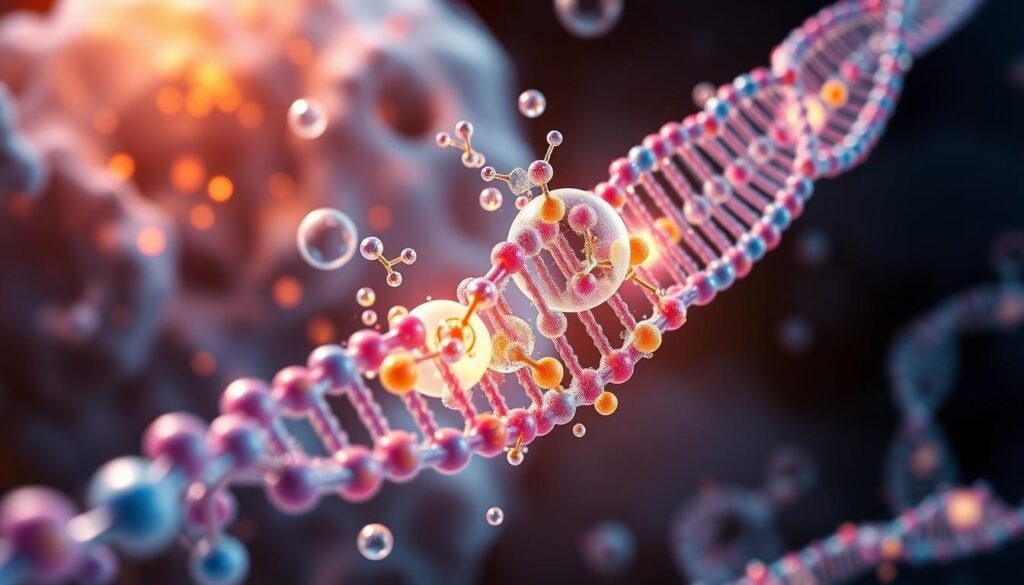
DNA repair is crucial for fixing DNA damage. NAD+ is essential for enzymes that fix DNA, like PARP1. It helps fix DNA breaks, which stops mutations that could cause cell problems or diseases.
NAD+ is vital for cell health. It helps fix DNA damage, preventing genetic mutations that lead to aging and chronic diseases.
Cellular senescence happens when cells stop dividing but don’t die. This can be due to DNA damage. NAD+ levels affect how cells age. Low NAD+ means more senescent cells. Keeping NAD+ levels up helps cells handle stress better and avoid aging too fast.
The link between NAD+, cell repair, and aging has big implications for chronic diseases. Chronic diseases like cancer, heart disease, and brain disorders are linked to poor cell repair and aging. Boosting NAD+ levels could help reduce risks of these diseases.
In summary, NAD+ is crucial for cell repair, including DNA fixing and preventing aging. Knowing its role helps us see how it can improve health and prevent chronic diseases.
You can boost NAD+ levels by eating certain foods and taking supplements. Knowing which foods increase NAD+ is important. NAD+ is key for health and metabolism.
Eating foods high in tryptophan and niacin can raise NAD+ levels. Tryptophan is in protein foods, and niacin is Vitamin B3. Here are some good sources:
Eating these foods helps make more NAD+. For example, try grilled chicken with lentils and veggies. It’s a tasty way to get more tryptophan and niacin.

Supplements can also help increase NAD+ levels. Nicotinamide Riboside (NR) and Nicotinamide Mononucleotide (NMN) are two effective options. They help raise NAD+ in your body.
| Supplement | Description | Benefits |
|---|---|---|
| Nicotinamide Riboside (NR) | A form of Vitamin B3 that is converted into NAD+ | Boosts NAD+ levels, supports energy metabolism |
| Nicotinamide Mononucleotide (NMN) | A nucleotide derived from ribose and nicotinamide | Enhances NAD+ production, supports cellular energy |
Adding NAD+ boosting foods to your diet is easy. Include lean proteins, fish, nuts, and legumes in your meals. For example, start with scrambled eggs, spinach, and whole-grain toast for breakfast.
Then, have grilled salmon with quinoa and steamed veggies for lunch. Being consistent with these foods and supplements is important. It helps keep NAD+ levels high.
NAD+ is key in how cells make energy. It helps turn nutrients into energy that cells can use. This makes it very important for how cells work.
The Krebs cycle is how cells make energy. NAD+ is important here because it helps make ATP, the cell’s energy. It does this by accepting electrons and changing to NADH.
Cells need NAD+ to make ATP. Without enough NAD+, cells can’t make energy well. This shows why keeping NAD+ levels up is key for health.
Exercise and NAD+ levels are connected. When NAD+ is low, it can hurt how well you do during exercise. Taking NAD+ precursors might help keep energy production up during workouts.
In summary, NAD+ is vital for energy in cells. It’s important in the Krebs cycle and for energy overall. Its role in exercise shows how important it is for health and fitness.
NAD+ is key to keeping our immune system strong. It helps in many ways to fight off infections and diseases. The immune system is complex, and NAD+ plays a big role in it.
NAD+ is important for immune cells like T cells and macrophages. It helps the immune system work right by:
NAD+ and Immune Cell Function
A study in Nature showed NAD+ is vital for immune cells. Without enough NAD+, the immune system doesn’t work well. This shows how important NAD+ is.
“NAD+ is a critical factor in the regulation of immune responses, and its dysregulation is associated with various immune-related disorders.”
NAD+ affects inflammation, a big part of the immune response. Too much inflammation can cause health problems. NAD+ helps keep this in check.
| NAD+ Levels | Effect on Inflammation |
|---|---|
| High | Reduced inflammation |
| Low | Increased inflammation |
Autoimmune diseases happen when the immune system attacks itself. NAD+ might help control these attacks, which could be good for treatment.
Scientists are still learning about NAD+ and autoimmune diseases. They’re looking into how NAD+ can help the immune system and lessen disease symptoms.
Recent studies have shown that NAD+ plays a big role in keeping us healthy and might even help us live longer. Scientists are still learning about NAD+ and its effects on aging and disease. New discoveries are being made that could change how we see aging and health.
Research on NAD+ and longevity is promising. It suggests that increasing NAD+ levels can improve how our cells work and make us more resilient. This could lead to a longer, healthier life. For example, a study in Nature found that giving mice NAD+ supplements made them live longer by improving their metabolism.
“NAD+ is a critical factor in the aging process, and its decline is associated with various age-related diseases.”
Scientists are excited about NAD+ and its potential to affect how long we live. They are looking into how NAD+ levels impact aging and how keeping them high might slow down age-related decline.
NAD+ might also help prevent or treat diseases like Alzheimer’s and Parkinson’s. Studies show that NAD+ is important for keeping brain cells healthy. When NAD+ levels drop, it could make these diseases worse.
Researchers at Harvard Medical School found that giving animals NAD+ precursors could protect their brains. This has sparked interest in using NAD+ to treat neurodegenerative diseases.
| Disease | Role of NAD+ | Potential Therapeutic Application |
|---|---|---|
| Alzheimer’s | Maintains neuronal health | NAD+ supplementation |
| Parkinson’s | Supports mitochondrial function | NAD+ precursor therapy |
NAD+ has a lot of potential for treating different diseases, not just aging and brain diseases. Scientists are looking into its use for metabolic disorders, heart health, and even some cancers.
As research goes on, the chances of NAD+-based treatments improving our health are growing. It’s important to talk to a doctor before starting any NAD+ supplements.
As more people take NAD+ supplements, it’s important to look at their side effects. These supplements are usually safe but can cause mild issues in some.
Some users might feel mild side effects. These can include:
These effects are usually short-lived and go away as your body gets used to the supplement. But, if they don’t go away, talk to a doctor.
Some people should not take NAD+ supplements or should talk to a doctor first. This includes:
As
“The safety and efficacy of NAD+ supplements in certain populations have not been thoroughly studied.”
, it’s wise to be careful.
Always talk to a doctor before starting NAD+ supplements. They can check if they’re right for you based on your health.
A doctor can also tell you the right amount to take and watch for any bad effects. This helps you get the most benefits with the least risks.
Boosting NAD+ levels naturally is possible with lifestyle changes and dietary adjustments. Knowing the nad+ role in the body helps us see how these changes improve health.
Regular exercise is key for healthy NAD+ levels. It boosts nad+ and metabolism and improves overall health. Getting enough sleep is also crucial. Sleep helps the body repair and rejuvenate, keeping NAD+ levels optimal.
Drinking enough water is vital for NAD+ levels. It helps the body function well, including nad+ benefits. Eating a balanced diet rich in nutrients also supports NAD+ production. Foods like fruits and vegetables that are NAD+ precursors are especially helpful.
By combining a balanced diet with regular exercise and enough sleep, you can boost NAD+ levels. This improves overall health and may even slow down some aging effects.


