Physical Address
Texas, U.S.A
Physical Address
Texas, U.S.A


As we age, our bodies change in many ways. This affects our health and how we feel. One key change is the drop in NAD+, a coenzyme that helps our cells work right.
NAD+ is very important for our health. Studies show it helps with energy and fixing DNA. This is crucial for keeping us healthy.
This review dives into the latest on nad+ research. We’ll look at how it affects our health and aging.
NAD+ is a coenzyme found in all living cells. It’s key for energy metabolism and keeping us healthy as we age. Its role goes beyond just energy production, affecting many cellular processes important for our health.
NAD+ is vital for many biological processes. It helps with energy metabolism, DNA repair, and cell signaling. It works as a coenzyme for many enzymes, making reactions crucial for cell function.
As we age, NAD+ levels drop, linked to age-related diseases. Boosting NAD+ can improve cellular energy production and health.
NAD+ is part of several key biochemical pathways. It’s a key player in the electron transport chain, helping make ATP, the cell’s energy. It also helps keep the cellular redox balance through redox reactions.
NAD+ is found in foods, but diet affects its levels. Foods high in vitamin B3 (niacin), like lean meats and whole grains, support NAD+ production. Foods rich in tryptophan, like eggs and dairy, also help make NAD+.
Key dietary sources of NAD+ precursors include:
Knowing about NAD+ and how to support it through diet and lifestyle is crucial. As research finds more about NAD+ and aging, new treatments are emerging.
Research shows NAD+ has many benefits, like better energy and aging well. It’s key to keep NAD+ levels up for good health.
NAD+ is vital for making energy in cells. It helps turn nutrients into energy, which is crucial for cell health. More NAD+ means better energy and less tiredness.
NAD+ levels drop with age, leading to health problems. Taking NAD+ supplements can help aging by boosting energy in cells and reducing stress. This can make you feel younger and healthier.
NAD+ is also important for the brain. It helps with thinking and mood. More NAD+ can improve memory and focus, helping with brain diseases.
In summary, NAD+ supplements offer many benefits, from more energy to better brain function. As research grows, it’s clear that NAD+ is key for health and well-being.
NAD+ is key in managing weight and improving exercise performance. It helps our bodies turn food into energy and grow. NAD+ plays a crucial role in these processes by helping enzymes work right.
NAD+ is vital for controlling metabolic pathways. It helps with glucose and lipid metabolism. The activation of these enzymes by NAD+ boosts metabolic health. It makes energy use more efficient and improves insulin sensitivity.
“The role of NAD+ in metabolism is multifaceted, and its influence on metabolic health is an area of active research,” notes a recent study. Knowing how NAD+ affects metabolism helps manage metabolic disorders.
NAD+ affects weight management by changing metabolic rate and fat metabolism. By enhancing the activity of certain enzymes, NAD+ helps break down fats. This can aid in weight loss.
Exercise performance is also influenced by NAD+, as it plays a role in energy production during physical activity. Adequate NAD+ levels are necessary for optimal mitochondrial function. This is crucial for endurance and performance during exercise.
“NAD+ is vital for the proper functioning of mitochondria, the energy-producing structures within cells,” according to a leading researcher in the field.
By supporting mitochondrial health, NAD+ can improve exercise performance and recovery. This makes NAD+ supplementation interesting for athletes. They seek to enhance their performance and reduce recovery times.
DNA repair is vital for our cells. NAD+ plays a big role in this process. Our DNA faces damage from stress and mistakes during copying. Good DNA repair keeps our genes stable and stops diseases like cancer.
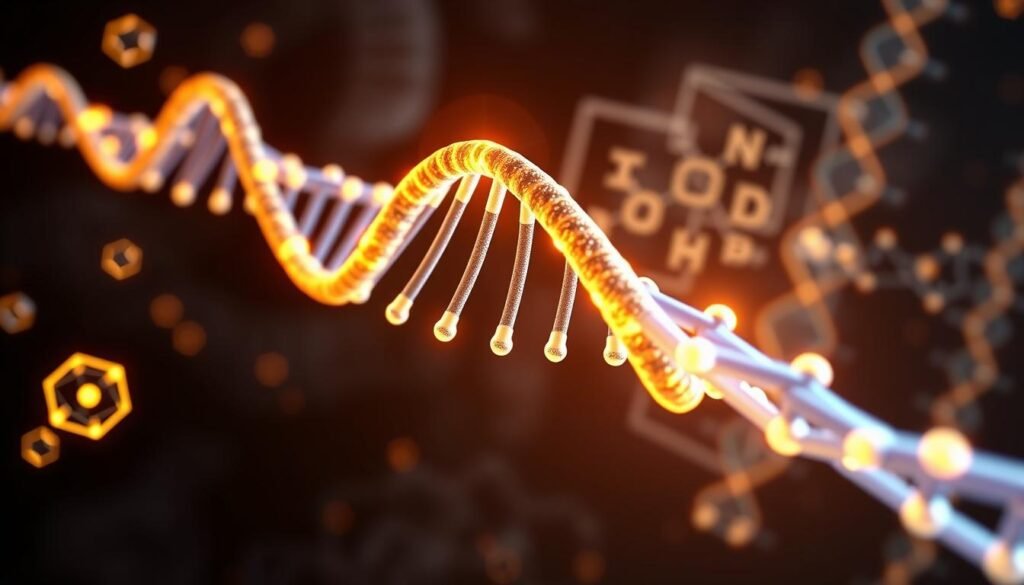
NAD+ helps activate enzymes like sirtuins and PARPs. These enzymes are key in fixing DNA damage. Sirtuins help fix DNA breaks, and PARPs spot and signal DNA damage. NAD+ boosts these enzymes, helping cells fix DNA better.
Cells need NAD+ to fix DNA damage well. When NAD+ levels are right, cells can fix DNA damage better. This keeps cells healthy and reduces mutation risk.
NAD+ in DNA repair is key for living longer. As we age, fixing DNA damage gets harder. This leads to aging and more disease risk. NAD+ helps keep DNA repair strong, which could mean healthier aging.
Studies on NAD+ and aging show it helps older animals stay healthy. It boosts DNA repair. This means NAD+ could slow aging.
Research links NAD+, DNA repair, and age-related diseases. Lower NAD+ and DNA repair skills are linked to diseases like Alzheimer’s and heart disease. Boosting NAD+ might lessen disease risk or severity.
Studying NAD+, DNA repair, and disease could lead to new treatments. These treatments could help us age better and prevent diseases.
NAD+ is key for energy and immune health. It helps our immune system fight off infections and diseases. A strong immune system is essential, and NAD+ is a big help.
NAD+ is crucial for immune cells like T cells and macrophages. These cells fight off harmful invaders. NAD+ supplements boost their power, making our immune system stronger.
NAD+ also helps control inflammation. Too much inflammation can lead to diseases. It keeps the balance right by managing inflammatory signals.
| Immune Function Aspect | Role of NAD+ |
|---|---|
| Immune Cell Function | Enhances the activity of T cells and macrophages |
| Inflammation Regulation | Regulates pro-inflammatory and anti-inflammatory cytokines |
In summary, NAD+ is vital for a healthy immune system. It supports immune cells and controls inflammation. This makes it key for health and preventing disease.
NAD+ is becoming a big deal in sports nutrition and improving performance. Studies show it’s key for energy, endurance, and getting better after exercise.

Endurance athletes might see big gains from NAD+. NAD+ therapy could boost their endurance by making mitochondria work better. This is vital for long activities like running, cycling, and swimming.
The NAD+ mechanism of action turns on sirtuins, important for energy use. This helps cells make energy more efficiently. It could mean better endurance and less tiredness.
NAD+ might also help with recovery. After hard workouts, NAD+ levels drop, causing muscle pain and tiredness. Taking NAD+ precursors like NR or NMN could help get NAD+ back faster.
Studies say NAD+ supplementation can cut down on damage and inflammation after exercise. This could help athletes recover faster and stay in top shape longer.
Research shows that nicotinamide adenine dinucleotide (NAD+) is key for mental health. It affects how we think and feel. NAD+ is found in all living cells and is vital for many processes, including our mental health.
NAD+ is linked to mood, with studies showing it might help with mood disorders. The exact ways it works are complex. It involves changing how our brain chemicals work and keeping our brain cells healthy.
Key aspects of NAD+ in mood regulation include:
NAD+ also affects how well we think. It helps keep brain cells healthy and boosts how the brain uses energy. This leads to better thinking skills.
The potential cognitive benefits of NAD+ include:
In summary, NAD+ is important for both mood and thinking skills. More research on NAD+ could lead to new ways to help our mental health.
NAD+ therapy is getting more popular. It’s important to know about NAD+ supplements and their benefits. These supplements help increase Nicotinamide adenine dinucleotide (NAD+) levels in our bodies. NAD+ levels drop as we age. There are many types of NAD+ supplements, each with its own benefits.
NAD+ supplements are divided into several types. They vary in their active ingredients and how they are delivered. Here are some common types:
The table below shows the different types of NAD+ supplements and what they do:
| Type | Active Ingredient | Benefits |
|---|---|---|
| NAD+ Boosters | Nicotinamide Riboside (NR), Nicotinamide Mononucleotide (NMN) | Boosts NAD+ levels, supports energy production |
| NAD+ Precursors | Nicotinamide, Nicotinic acid | Supports NAD+ production, may improve overall health |
| Combination Supplements | Multiple ingredients (e.g., vitamins, minerals, antioxidants) | Comprehensive support for NAD+ production and overall wellness |
When picking an NAD+ supplement, consider a few key factors. This ensures you get a good product. Here are some tips:
Understanding NAD+ supplements and how to pick good ones helps you make smart choices. This way, you can add these supplements to your health routine wisely.
It’s important to know the possible side effects of NAD+ supplements. These supplements are popular for their health benefits. But, it’s key to understand the potential downsides.
Studies have found common side effects like nausea, headaches, and fatigue. These usually go away by themselves without needing a doctor.
Some people might face more serious side effects, like digestive issues or dizziness. It’s crucial to watch how your body reacts. If problems don’t go away, you might need to change your dosage or stop using it.
Some people should not take NAD+ supplements or should talk to a doctor first. This includes pregnant or breastfeeding women, people with certain health issues, and those on specific medicines.
“It’s critical to consult with a healthcare provider before adding any new supplement to your regimen, especially if you have underlying health conditions or are taking other medications.”
NAD+ research shows the need for personalized plans. This means considering your health, medicines, and possible interactions.
Knowing the possible side effects helps you use NAD+ supplements safely. It’s all about being careful and informed.
The scientific world is diving deep into NAD+ research and clinical trials. As we learn more about NAD+, its uses in medicine and health are growing.

Recent studies have uncovered a lot about NAD+ in biology. It’s key for keeping cells’ energy balanced, fixing DNA, and guiding metabolism. For example, a study in the Journal of Clinical Investigation found NAD+ can boost mitochondria in older adults.
Clinical trials are also looking into NAD+ for treating diseases like neurodegenerative and metabolic disorders. These trials are showing how safe and effective NAD+ supplements can be. This opens doors for more uses in medicine.
Research on NAD+ is vital for understanding its health benefits. As we learn more, we see NAD+ has many roles in keeping us healthy and preventing illness. More research is needed to unlock its full potential.
The importance of ongoing research is huge. It helps us understand how NAD+ can enhance health. Future studies might look into the best ways to take NAD+ supplements, their long-term effects, and how they work with other treatments.
It’s crucial that research stays translational. This means connecting lab findings to real-world uses. By doing this, we can make sure NAD+ research benefits human health.
Boosting NAD+ levels naturally is easy with simple lifestyle changes. By adding these habits to your daily life, you can increase NAD+ and enjoy its benefits.
Several lifestyle adjustments can help increase NAD+ levels. These include:
Diet is crucial for maintaining optimal NAD+ levels. Certain foods can boost NAD+, including:
Here’s a comparison of different foods that can help boost NAD+ levels:
| Food | NAD+ Boosting Potential | Key Nutrient |
|---|---|---|
| Chicken | High | Vitamin B3 |
| Berries | Medium | Polyphenols |
| Whole Grains | High | Vitamin B3 |
By making these lifestyle changes and dietary adjustments, you can naturally increase your NAD+ levels. Enjoy the benefits of improved energy, enhanced cognitive function, and overall well-being.
NAD+ research is revealing more about its role in human health. It shows how it works and its potential uses in NAD+ therapy.
Researchers are looking into how NAD+ affects age-related diseases and exercise performance. This research will help us understand the good and bad of NAD+ supplements.
Adding NAD+ to your health plan might mean changing your lifestyle and diet. Knowing how NAD+ works can help you decide if it’s right for you.